St. Dominic: A Torch of Truth, Prayer, and Conversion

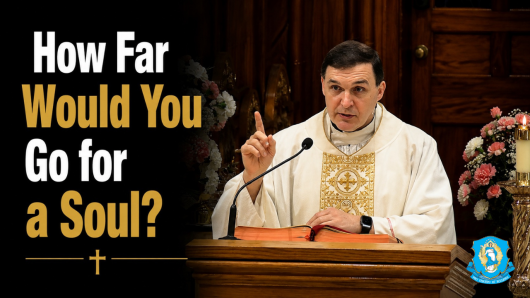
In his homily for the Memorial of Saint Dominic, Fr. Anthony Gramlich, MIC, reflected on the remarkable life and mission of Saint Dominic, founder of the Dominican Order. Even before Dominic was born, his life was surrounded by signs of a special calling. According to tradition, his mother, Blessed Joan of Aza, had a dream in which she saw a dog carrying a burning torch in its mouth, running throughout the world and setting it on fire. This image later became associated with the Dominicans, symbolizing their mission to spread the light and truth of the Gospel throughout the world. Catholic tradition also closely associates Saint Dominic with the Holy Rosary. According to this tradition, the Blessed Virgin Mary appeared to him and encouraged the use of the Rosary as a powerful means of prayer and evangelization. Through prayer and preaching, many conversions were attributed to his ministry, and devotion to the Rosary became an important part of the Dominican spiritual tradition. © 2026 Marian Fathers of the Immaculate Conception. All rights reserved. Readings for August 8th 2026: https://bible.usccb.org/bible/readings/memorial-saint-dominic-priest

Added to Favorites!
Added to Watch Later!

You might also like...

All men were by nature foolish who were in ignorance of God,and who from the good things seen did not succeed in knowing him who is,and from studying the works did not discern the artisan;But either fire, or wind, or the swift air,or the circuit of the stars, or the mighty water,or the luminaries of heaven, the governors of the world, they considered gods.Now if out of joy in their beauty they thought them gods,let them know how far more excellent is the Lord than these;for the original source of beauty fashioned them.
The Place Persecution Cannot Reach In today’s homily, Fr. Tyler reflects on a truth revealed by the Vietnamese Martyrs—117 canonized, more than 300,000 known to God alone—who witnessed with their blood that no earthly power can touch the deepest sanctuary of the human person: the heart. Persecution may imprison the body, silence the voice, or press upon the mind, but it cannot force the interior surrender of one’s freedom. As the Catechism teaches, the heart is “the seat of moral decision,” the place where we choose for or against God.
In today’s homily, Fr. Mark Baron reflects on the harrowing story from 2 Maccabees: a mother witnessing the martyrdom of her seven sons for refusing to abandon God’s law. As Fr. Mark highlights, the woman’s courage was rooted in hope—hope in God’s providence, mercy, and the promise of eternal life. This hope allowed her to endure unimaginable suffering, guiding her sons to remain steadfast, even in the face of death (2 Maccabees 7:1–31).