Proving God Exists without Using the Bible or Faith
Proving God Exists without Using the Bible or Faith

On the Feast of St. Thomas Aquinas, Fr. Chris Alar, MIC, reflects on a decisive moment in his own vocation and on the gift the Church receives through reason rightly ordered to faith. Saint Thomas shows us that clarity about God’s will is not opposed to intellect but illuminated by it. As the Catechism teaches, “God can be known with certainty from created reality by the light of human reason” (“Catechism of the Catholic Church” 31).
Father Chris explains several of St. Thomas Aquinas’s classical proofs for the existence of God, especially the arguments from motion and efficient cause. Nothing moves or comes into being on its own. Because nothing causes itself, reason leads us to a First Mover and First Cause who depends on nothing else. As Scripture affirms, “Ever since the creation of the world, his invisible attributes… have been able to be understood and perceived in what he has made” (Rom 1:20; NABRE).
Saint Thomas reminds us that faith is never blind. God invites us to love Him with our minds as well as our hearts, using logic, observation, and wonder at creation to recognize an intelligent Designer. Father Chris emphasizes that doubt can become a doorway to deeper trust when it is met with honest reasoning and grace, echoing Saint Faustina’s call to trust in God’s providence (“Diary of Saint Faustina,” 1578).
You might also like...
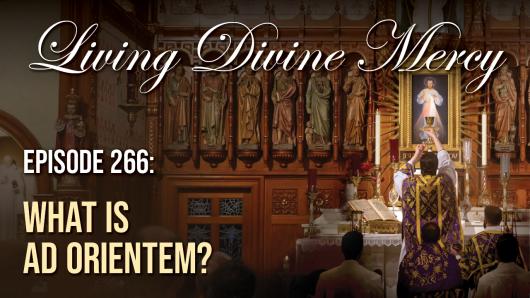
Something in the Catholic liturgy that is often misunderstood is the celebration of Holy Mass Ad Orientem.