Deepening the Our Father: Lenten Prayer
Deepening the Our Father: Lenten Prayer

The readings for this homily: https://bible.usccb.org/bible/readings/022426.cfm
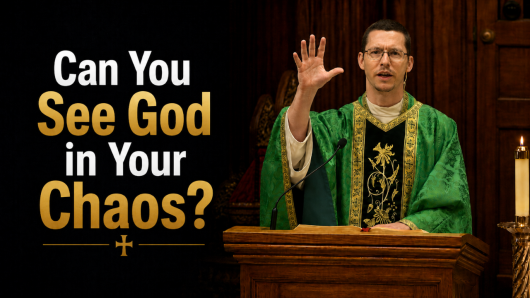
Father Mark Baron, MIC, invites us to move beyond a superficial recitation of the Our Father and let this prayer become the heartbeat of our Lenten journey. He reminds us that the season of Lent began with Ash Wednesday, calling us to the three classic practices of prayer, fasting, and almsgiving. These disciplines are not ends in themselves; they are pathways that lead us into a richer relationship with the Holy Trinity.
Father Mark stresses that Jesus warned against “babbling like the pagans,” whose prayers were empty repetitions aimed at manipulating distant gods. In contrast, our Father knows our needs before we ask, and He invites us into an engaged, relational dialogue. Father Mark explains that God created us as image‑bearers so that we can reflect His holiness in our words, deeds, and community life. When we pray the Our Father slowly, ruminating on each petition, we align our will with the Father’s, asking that His kingdom come; that His will be done; for daily bread, forgiveness, and protection from temptation.
He points out that true prayer ordinarily requires the support of the Sacraments — the Eucharist, Confession, and the other means of grace that sustain us when our human strength falters. By receiving the Sacraments, we open ourselves to the grace that makes our repeated prayers meaningful rather than mechanical.
Father Mark also addresses a common misunderstanding: that repetitive prayer is “babbling.” He notes that Scripture itself contains beautiful repetitions (e.g., the Psalms) and that Jesus Himself prayed repetitively the night before His Passion, demonstrating that sustained, heartfelt prayer deepens faith. Likewise, contemporary worship songs often repeat refrains to embed truth in the heart.
You might also like...