When Mercy Writes the Last Chapter
When Mercy Writes the Last Chapter

The readings for this homily: https://bible.usccb.org/bible/readings/013026.cfm
Father Jason Lewis, MIC, leads us into one of Scripture’s most sobering and hope-filled accounts: the fall and repentance of King David. Chosen, anointed, and beloved by God, David nevertheless sins gravely — through sloth, lust, deceit, and murder. Yet this story is not preserved to excuse sin, but to reveal the astonishing depth of Divine Mercy.
David’s crimes are real and devastating. He abuses power, betrays trust, and orchestrates the death of an innocent man. But when confronted by the prophet Nathan, David does not justify himself. He repents. From the depths of that repentance comes Psalm 51: “Have mercy on me, O God, in your kindness; in your compassion blot out my offense” (Ps 51:3; NABRE). This cry becomes the prayer of the whole Church.
What follows defies human logic. God does not abandon His covenant. From this broken history comes restoration. From repentance comes mercy. And from this wounded lineage comes Solomon — and ultimately Jesus Christ Himself. As St. Paul teaches, “where sin increased, grace overflowed all the more” (Rom 5:20; NABRE). Mercy does not deny justice; it transforms the sinner who turns back to God.
This is the heart of The Divine Mercy message entrusted to Saint Faustina: no sin is greater than God’s mercy when met with repentance and trust (“The Diary of St. Faustina,” 699). The Catechism affirms that God’s mercy is infinite and offered to every contrite heart (“Catechism of the Catholic Church,”1847).
This homily invites us to hope. No past is irredeemable. No repentance is wasted. God is always working — not against us, but with us, for our salvation.
You might also like...
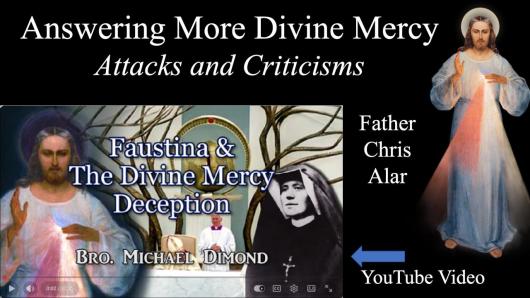
In part 2, Fr. Chris Alar addresses more attacks against Divine Mercy, St. Faustina, and the Diary of St. Faustina in the video "Faustina & The Divine Mercy Deception" by Br.