The Treasure That Leads to Heaven
The Treasure That Leads to Heaven

When Jesus warns that “it will be for the one who stores up treasure for himself but is not rich in what matters to God” (Lk 12:21), He invites us to ask a deeper question: What truly matters to God? Wealth itself is not evil — Scripture shows that God entrusts riches to some for the good of others. But when wealth becomes our comfort, our security, or our idol, it becomes a chain that binds the soul.
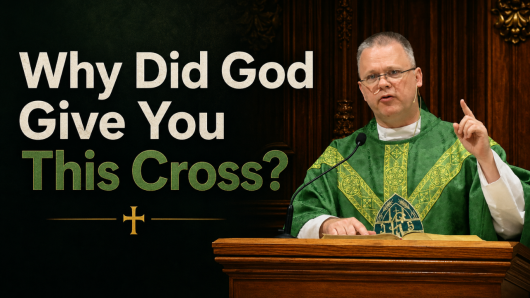
Fr. Gabe reminds us that everything we possess must be surrendered to God’s will. The first step? Get on your knees. Ask, “Lord, what do You want me to do with what You’ve given me?” That surrender transforms earthly treasure into eternal treasure. Whether you use your blessings to care for your family, support the Church, or help the poor, generosity becomes a pathway to holiness when it flows from love.
But what if you’ve misused your wealth or clung too tightly to it in the past? Don’t despair. Jesus calls you into the present moment, into mercy, where your heart can be purified. As St. Faustina wrote in her Diary (342), “Suffering is the greatest treasure on earth, for it purifies the soul.” Through detachment and trust, we learn that the greatest riches are not in possessions, but in Christ Himself.
Even suffering, united to Jesus, becomes gold refined in the fire — the very treasure that leads to Heaven. The pure of heart shall see God (Mt 5:8).
You might also like...