So Much of the Catholic Faith is Proved Biblically in this One Passage!
So Much of the Catholic Faith is Proved Biblically in this One Passage!

The readings for this homily: https://bible.usccb.org/bible/readings/011626.cfm
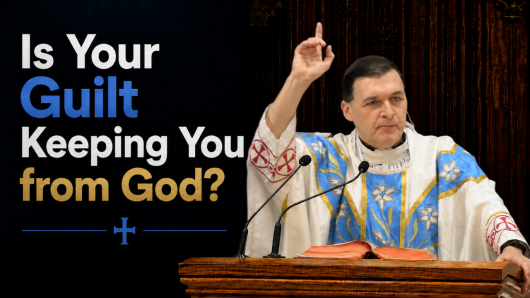
Father Chris Alar, MIC, draws us into the dramatic Gospel scene of the paralytic lowered before Jesus and reveals why this passage speaks so clearly of the Sacraments of the Church. What Jesus responds to first is not the man’s condition, but faith — specifically, the faith of those carrying him. “When Jesus saw their faith” (Mk 2:5; NABRE), He forgives sins before He heals the body.
This moment reveals something essential about Catholic belief. Faith is never completely private. We carry one another to Christ through intercessory prayer, just as parents bring children to Baptism and the Church brings sinners to Confession. The paralytic is helpless, yet forgiveness is granted because of the faith of others — an image that mirrors infant Baptism, where grace is given through the faith of parents and godparents. Sin is wiped away, not by personal achievement, but by Christ’s mercy working through His Church.
Jesus exposes the deeper paralysis beneath the physical one: sin. Before restoring strength to the man’s limbs, He restores communion with God. This points directly to the Sacrament of Confession, where Christ continues His ministry of forgiveness through priests acting by His authority: “Whose sins you forgive are forgiven them” (Jn 20:23; NABRE). Forgiveness is not the end — it demands a response. Christ commands the man to rise. Mercy empowers transformation.
Father Chris challenges us to ask: After Confession, do we stay down, or do we get up? Repentance is not merely sorrow; it is conversion, transformation. The mat that once held us becomes a witness to what God has healed. Christ frees us so that we may walk — changed, restored, and sent forth.
You might also like...