God Came Down So We Could Be Raised Up
God Came Down So We Could Be Raised Up

The readings for this homily: https://bible.usccb.org/bible/readings/123025.cfm
The mystery of Christmas overturns every illusion of self-salvation. God does not wait for humanity to climb back to Him. He comes down.
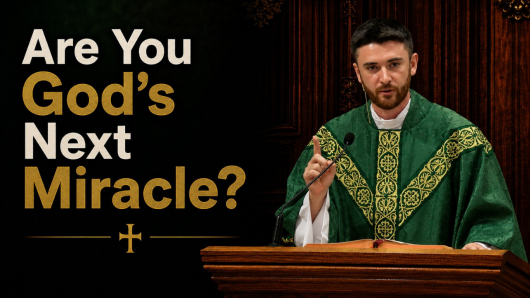
Father Anthony Gramlich, MIC, draws us into this central truth of the Incarnation: Fallen humanity cannot raise itself by its own efforts. Grace is not something we generate. Redemption begins with divine humility.
The world repeatedly offers a different promise — especially in modern spiritual movements — that we can elevate ourselves through technique, effort, or enlightenment. But Scripture reveals the opposite. Because of sin, humanity cannot lift itself to God. Instead, God lowers Himself to lift us. As St. Paul writes, Christ “emptied himself, taking the form of a slave” (Phil 2:7; NABRE). Born in poverty and obscurity, rejected by the world, Jesus enters fully into our human condition — without sin — in order to heal it from within.
Father Anthony traces this saving pattern through salvation history itself. Humanity fell through the wood of the tree in Eden, and humanity is raised through the wood of the Cross. God is born on wood, works with wood, and dies on wood so that what once led us away from Heaven becomes the instrument that brings us back. Christmas is already pointing toward Calvary, and Calvary toward resurrection.
This mystery demands proclamation. The angels announced it. The shepherds ran to see it. Anna spoke of it to all who awaited redemption. Christmas is not meant to remain silent or sentimental. It is the celebration of a God who acts, a God who saves, and a God who does for us what we cannot do for ourselves. To speak about Christmas rightly is to speak about Jesus Christ — the One who came down so that we might be raised up by grace.
“Though he was in the form of God… he humbled himself” (Phil 2:6a & 8a; NABRE).
You might also like...