The Divine Mercy Chaplet Spoken
The Divine Mercy Chaplet Spoken

This Divine Mercy Chaplet combines two requests of Jesus to St. Faustina -- to pray the Chaplet of Divine Mercy and to meditate on His passion, especially at the 3 o'clock hour, every day.
We hope you enjoy this Divine Mercy Chaplet version from the Marian Fathers of the Immaculate Conception, the official promoters of the authentic Divine Mercy message since 1941, barely three years after the death of St. Maria Faustina Kowalska, the Lord's "secretary" of Divine Mercy.
In 1935, St. Faustina received a vision of an angel sent by God to chastise a certain city. She began to pray for mercy, but her prayers were powerless. Suddenly she saw the Holy Trinity and felt the power of Jesus’ grace within her. At the same time she found herself pleading with God for mercy with words she heard interiorly:
Eternal Father, I offer You the Body and Blood, Soul and Divinity of Your dearly beloved Son, Our Lord Jesus Christ, in atonement for our sins and those of the whole world; for the sake of His sorrowful Passion, have mercy on us. (Diary, 475)
As she continued saying this inspired prayer, the angel became helpless and could not carry out the deserved punishment (see 474). The next day, as she was entering the chapel, she again heard this interior voice, instructing her how to recite the prayer that our Lord later called "the Chaplet." This time, after "have mercy on us" were added the words "and on the whole world" (476). From then on, she recited this form of prayer almost constantly, offering it especially for the dying.
You might also like...

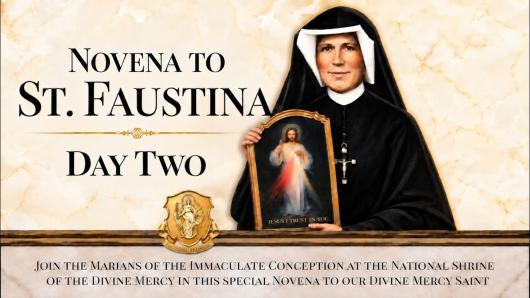
Today, on Day Two of our Novena to St. Faustina, we turn our hearts toward Jesus in the Blessed Sacrament.