The Kingdom God Always Intended
The Kingdom God Always Intended

The readings for this homily: https://bible.usccb.org/bible/readings/012926.cfm
When Jesus speaks of a lamp placed on a stand, He reveals how God works in history. What God makes known is meant to give light, and what He reveals is never accidental or incomplete.
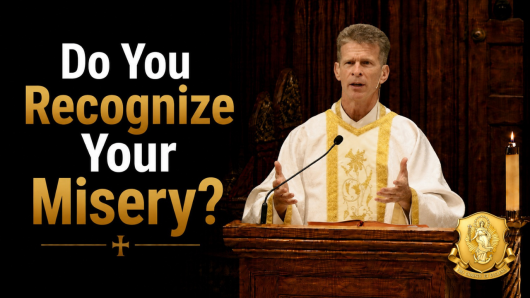
Father Mark Baron, MIC, shows how the Gospel and the First Reading proclaim a single, unified plan of salvation. The promise given to King David of a kingdom without end was never about political survival or earthly dominance. Even when Israel’s kingdoms fell, God’s promise did not fail. It was fulfilled in a way far greater than David could have imagined.
At the Annunciation, the eternal kingdom promised to David takes flesh in Christ. God does not establish a political empire; He establishes a spiritual kingdom meant to rule hearts. From Abraham to Moses, from David to Christ, God’s covenants expand His family until all are invited in. Israel is not discarded or replaced, but fulfilled. The Church is the continuation and completion of God’s plan — the universal family gathered under Christ the King.
Father Mark also clarifies modern misunderstandings that divide salvation history or reduce God’s kingdom to end-times speculation. Catholic teaching proclaims one continuous plan, guided by the Holy Spirit, entrusted to the Church, and ordered toward charity, justice, and conversion of heart.
Christ already reigns — in the Eucharist, in the Sacraments, and in every heart willing to receive His grace.
You might also like...