The Power and Purpose of Prayer
The Power and Purpose of Prayer

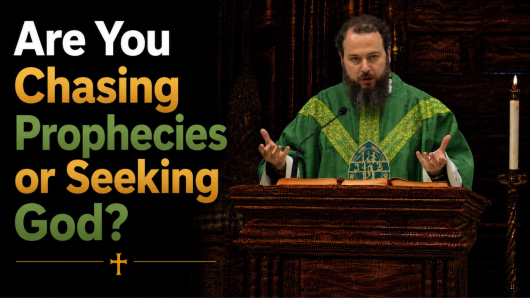
In today’s homily, Fr. Chris Alar reminds us that prayer is not just something we do—it is who we are called to be. It is the lifeline between our soul and God, the “raising of one’s mind and heart to God” (Catechism of the Catholic Church, 2559). Prayer is communication, relationship, and covenant. It is how we learn to love the Lord and conform our human will to His divine will.
Fr. Chris breaks down three essential forms of prayer: vocal, meditative, and contemplative. We begin with vocal prayer—spoken words like the Our Father, Hail Mary, or Psalms—which lead us into meditation, the reflection on Scripture, the Rosary, and the mysteries of Christ’s life. Finally, we enter contemplation: silent adoration before God, resting in His presence, letting Him speak to our hearts.
Prayer is not an activity for saints alone—it is the daily work of sinners seeking grace. As St. Alphonsus Liguori boldly said, “Those who pray are certainly saved; those who do not pray are certainly damned.” In prayer, we practice heaven itself, because heaven is eternal communion with God.
Fr. Chris teaches that every grace flows through prayer. Even Jesus prayed—not because He needed to, but to model perfect submission to the Father. When we pray, we imitate Christ. When we pray the Mass, we join in the most perfect form of prayer: God offering God to God—the Holy Spirit offering the Son to the Father for the salvation of the world.
Through prayer, we empty ourselves like the jars at Cana so that Christ can fill us with His grace. In humility, gratitude, and perseverance—especially when prayer feels dry—we discover that prayer is not about taking, but giving. It is love in action.
You might also like...