God of the OT is mean and God of the NT is nice?
God of the OT is mean and God of the NT is nice?

The readings for this homily: https://bible.usccb.org/bible/readings/012126.cfm
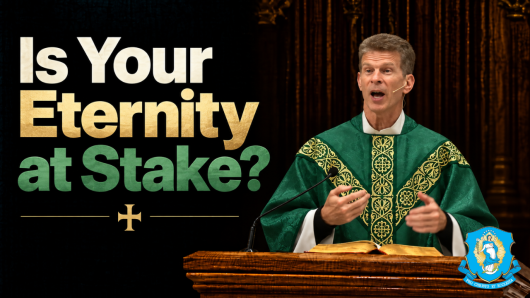
Many people struggle with the Bible because they sense a tension between the Old Testament and the New. The God of the Old Testament is sometimes portrayed as harsh, violent, even distant, while the New Testament reveals mercy, healing, and love. Father Chris Alar, MIC addresses this confusion directly by reminding us of the question Christ Himself poses: “Is it lawful to do good on the sabbath rather than to do evil, to save life rather than to destroy it?” (Mk 3:4; NABRE).
Without Christ, humanity’s vision is limited. In the Old Testament, death, war, and violence reflect a world still waiting for the full revelation of divine life. The Catechism teaches that God gradually prepared His people to receive the Gospel through salvation history, leading them step by step toward Christ (Catechism of the Catholic Church §122). The New Testament does not contradict the Old; it fulfills it.
This contrast becomes striking when we consider Saint Agnes, whose feast the Church celebrates. Her very name echoes the Latin agnus, meaning lamb. Young, pure, and wholly given to Christ, she chose life in the fullest sense, even when it led to martyrdom. Her witness stands between death and life, between the violence of the world and the light of Christ. As Scripture proclaims, “I came so that they might have life and have it more abundantly” (Jn 10:10; NABRE).
The culture of death persists whenever Christ is rejected, whether in ancient persecution or modern disregard for human dignity. Yet Christ remains the Light of the world, drawing us from darkness into truth, from death into life. In Him alone do we find the way, the truth, and the life.
You might also like...