The Bridge of Mercy and the Power of Thanksgiving
The Bridge of Mercy and the Power of Thanksgiving

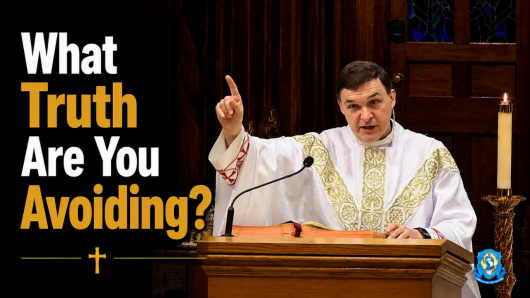
Fr. Jason Lewis reminds us that joy is born from gratitude, and gratitude flows from knowing the faithfulness of God. The very word “Eucharist” means thanksgiving. Each time we come to Mass, we are invited to rediscover the joy that springs from a heart that thanks and trusts the Lord. Gratitude is not merely polite—it is transformative. It lifts us out of self-focus and immerses us in the mercy of God, who remains ever faithful, even when we are not.
St. Paul teaches that even if we are unfaithful, God remains faithful, “for He cannot deny Himself” (2 Tim 2:13). This divine consistency is the bridge between where we are and where He calls us to be. That bridge is mercy, and the key to crossing it is trust. When we trust in His merciful love, He meets us in our weakness and lifts us higher than we could ever climb on our own.
Fr. Jason reminds us that Naaman’s washing in the Jordan (2 Kings 5) foreshadows Baptism—a plunging into the life of God that cleanses our spiritual leprosy. Like Naaman, we must humble ourselves to be “immersed” in grace again and again. Baptism is not a one-time event; it is a lifelong transformation, a “pickling” of the soul in divine mercy so that we become salt and light to the world (Matt 5:13–14).
heart cannot remain bitter. Just as the healed leper in Luke 17 returned to Christ in praise, so must we return again and again, throwing ourselves at His feet in thanksgiving. The Eucharist renews that gratitude in us—it is the moment heaven and earth meet in love and mercy.
So if you seek peace, joy, and renewal, begin with thanksgiving. It transforms not just your outlook, but your soul. God’s mercy bridges every gap when we approach Him with a heart full of gratitude.
You might also like...